What kind of book am I reading?
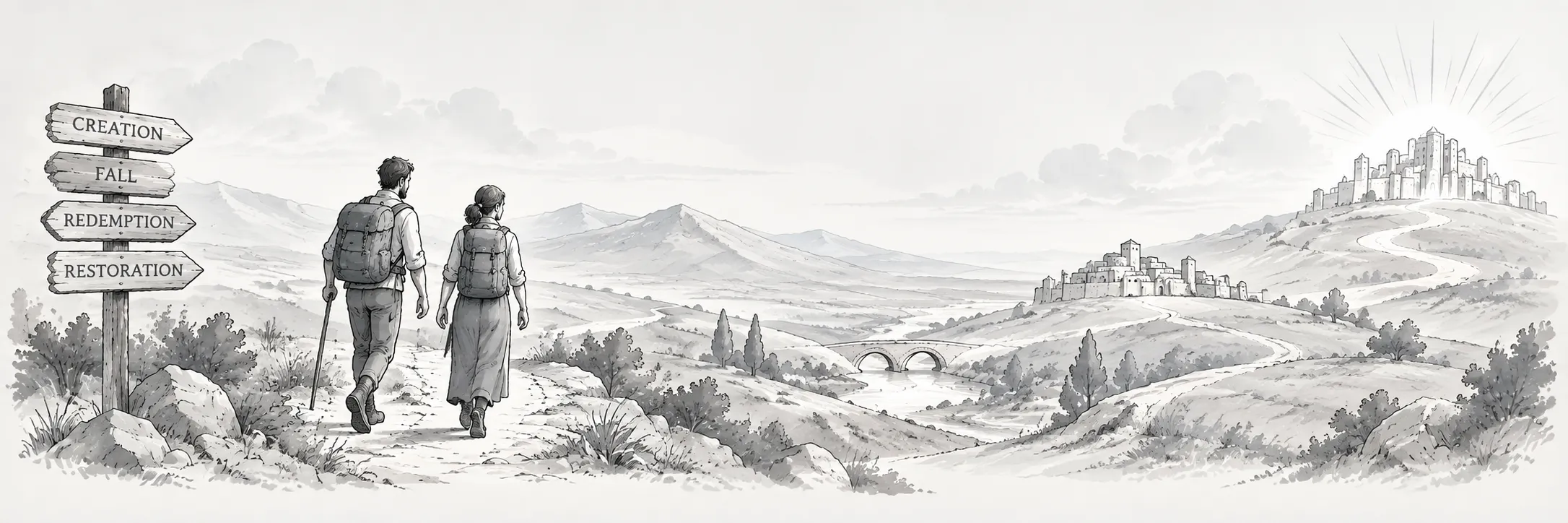
The Bible is one unified story, but it is made up of different kinds of literature. Each type communicates truth in a slightly different way. Knowing what kind of literature you are reading helps you understand how to read it well. The Bible is not a single book written in a single style. It is a library of 66 books, written by many human authors, in different literary forms, across many centuries—yet telling one unfolding story of God’s relationship with humanity.
1. Narrative
The story of what God has done
Narrative tells us about people, places, events and God’s dealings with humanity. It makes up a large part of the Bible.
When reading narrative, ask:
- What happened?
- Who are the important people?
- What is happening in the story?
- What does this reveal about God and His people?
- Where does this event fit into the bigger biblical story?
Books containing significant narrative
Old Testament
- Genesis
- Exodus
- Numbers
- Joshua
- Judges
- Ruth
- 1 Samuel
- 2 Samuel
- 1 Kings
- 2 Kings
- 1 Chronicles
- 2 Chronicles
- Ezra
- Nehemiah
- Esther
New Testament
- Matthew
- Mark
- Luke
- John
- Acts
Remember: Biblical narrative tells us what happened. It does not necessarily mean that everything that happened is something God approved of or wants us to imitate.
2. Law / Torah
God’s covenant instructions for His people
The word Torah means “instruction” or “teaching.” These books establish the foundations of Israel’s relationship with God, including covenant, worship, sacrifice, holiness, justice and community life.
Books of the Torah
- Genesis
- Exodus
- Leviticus
- Numbers
- Deuteronomy
When reading the Law, ask:
- What does this teach us about God?
- What was God’s covenant with His people?
- What was being required of Israel?
- What was the purpose of this instruction?
- How does this fit into the unfolding story that eventually leads to Christ?
Remember: These laws were given within a particular covenant and historical setting. Don’t automatically assume that every Old Testament regulation applies to Christians in exactly the same way today.
3. Poetry
Truth expressed through words, pictures and emotion
Biblical poetry is not simply poetry in the modern sense. It often uses parallel lines, repetition, imagery, metaphor and vivid pictures to express truth and human experience. Poetry can express joy, sorrow, fear, worship, anger, repentance, love and trust.
Books containing significant poetry
- Job
- Psalms
- Proverbs
- Ecclesiastes
- Song of Songs
Poetry is also found throughout the Prophets and elsewhere in the Bible.
When reading poetry, ask:
- What picture is being created?
- Is this literal or poetic imagery?
- What emotion is being expressed?
- Is there repetition or contrast?
- What is the central truth?
Remember: Don’t flatten poetry into literal prose. When Psalm 18 describes God as a “rock” or Psalm 91 speaks of shelter under His “wings,” the imagery is helping us understand something true about God.
4. Wisdom Literature
Learning how to live wisely in God’s world
Wisdom literature wrestles with some of life’s biggest questions:
- How should I live?
- What is wisdom?
- Why do good people suffer?
- What is the meaning of life?
- What does it mean to fear God?
Wisdom books
- Job
- Proverbs
- Ecclesiastes
Psalms and Song of Songs are also traditionally included within the broader Wisdom/Poetry grouping, although they have distinctive literary forms.
When reading wisdom literature, ask:
- What principle is being taught?
- Is this a general observation or an absolute promise?
- What does this teach me about wise living?
- What does this reveal about the human condition?
- How does this fit with the rest of Scripture?
Remember: A proverb is generally a wise principle, not a guarantee that something will happen every single time.
5. Prophecy
God speaks to His people
The prophets were not primarily people who predicted the future. They were God’s messengers, speaking God’s word into particular historical situations.
They called God’s people to:
- repent
- return to God
- practise justice
- trust Him
- remain faithful to the covenant
- hope in God’s promises
Their messages often included both judgment and hope.
Major Prophets
- Isaiah
- Jeremiah
- Lamentations
- Ezekiel
- Daniel
Minor Prophets
- Hosea
- Joel
- Amos
- Obadiah
- Jonah
- Micah
- Nahum
- Habakkuk
- Zephaniah
- Haggai
- Zechariah
- Malachi
“Major” and “Minor” do not mean more or less important. They refer primarily to the length of the books.
When reading prophecy, ask:
- Who was the prophet speaking to?
- What was happening historically?
- What problem was being addressed?
- What did God want His people to do?
- Is this speaking about their immediate situation, the future, or both?
- Does the New Testament connect this passage to Jesus?
6. Gospel
The good news that a new King has arrived with a new kingdom, where we can be reunited in our love relationship with God in Christ.
The four Gospels tell the story of Jesus’ life, teaching, death and resurrection.
They are not four completely different stories. They are four accounts that present Jesus from different perspectives.
The Gospels
- Matthew
- Mark
- Luke
- John
When reading a Gospel, ask:
- What does this tell me about Jesus?
- What is Jesus teaching?
- How do people respond to Him?
- What does Jesus reveal about God?
- Why is the cross important?
- What does the resurrection change?
Remember: The word gospel means good news. The Gospels are not merely biographies of Jesus; they proclaim who He is and what He has done, that a New Kingdom has come in which, we who believe in Jesus, can live.
7. Epistle / Letter
Teaching God’s people how to live in Christ
An epistle is a letter written to a particular person, church or group of believers.
The letters address real situations in real churches and explain what the gospel means for everyday life.
Paul’s Letters
- Romans
- 1 Corinthians
- 2 Corinthians
- Galatians
- Ephesians
- Philippians
- Colossians
- 1 Thessalonians
- 2 Thessalonians
- 1 Timothy
- 2 Timothy
- Titus
- Philemon
General Letters
- Hebrews
- James
- 1 Peter
- 2 Peter
- 1 John
- 2 John
- 3 John
- Jude
When reading a letter, ask:
- Who wrote it?
- Who received it?
- Why was it written?
- What problem or situation is being addressed?
- What does it teach about the gospel?
- What should believers believe?
- How should believers live?
Remember: Start by understanding what the letter meant to its original readers before deciding what it means for us today.
8. Apocalyptic Literature
God reveals what is normally hidden
This type of literature uses visions, symbols, dramatic imagery and heavenly scenes to reveal God’s purposes.
It can be strange and difficult because it communicates through pictures rather than ordinary narrative.
Major examples
Old Testament
- Parts of Daniel
- Parts of Ezekiel
- Parts of Zechariah
- Other prophetic passages
New Testament
- Revelation
When reading apocalyptic literature, ask:
- What vision is being described?
- What symbols are being used?
- Does the Bible itself explain the symbol?
- What would this have meant to the original audience?
- What does this reveal about God, evil, judgment and hope?
- How does it connect with the rest of Scripture?
Remember: Don’t begin by trying to decode every symbol. Begin by asking what the passage is trying to reveal.